KitCat: Kitting Category Automation
Automating category selection for reverse logistics at Amazon Devices
UX Designer — Sole Designer
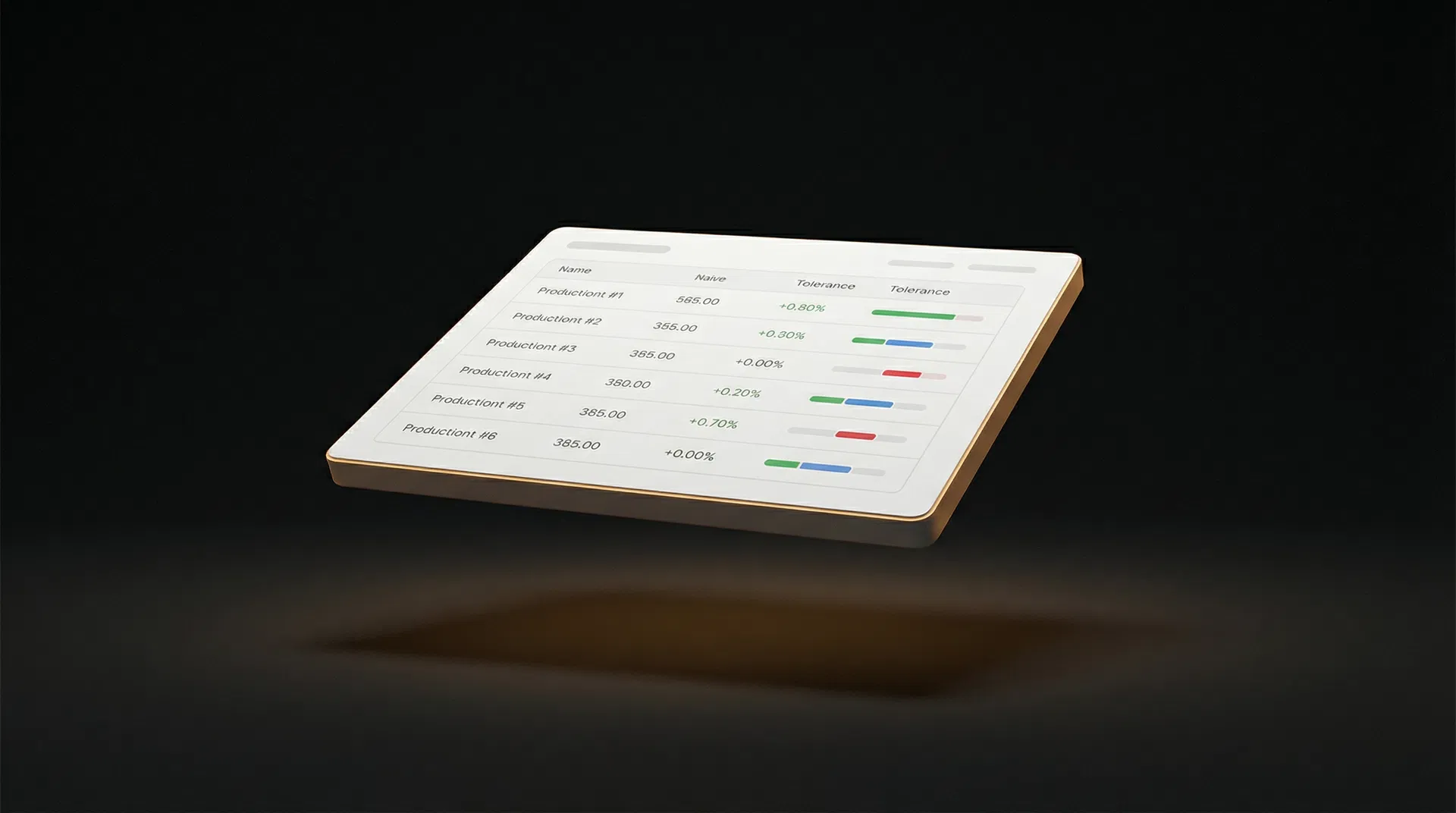
Overview
Designed a decision-audit interface for automated kitting category selection, enabling operations teams to review and override category assignments with clear visibility into automated decisions.
The Problem
Operations teams lacked visibility into how automated systems assigned kitting categories to returned devices. When assignments were incorrect, there was no efficient way to review the logic, override decisions, or track changes over time. This created bottlenecks in the reverse logistics pipeline and led to revenue loss from misrouted inventory.
Approach
I designed a rulesets management UI that let operations teams create, edit, and manage the 2.6k+ category combinations. An automated guidance view surfaced tolerance-based recommendations with clear approve/reject workflows. I also built a history system for row-level auditability and a component architecture with Figma variables to support rapid iteration across multiple UI states.
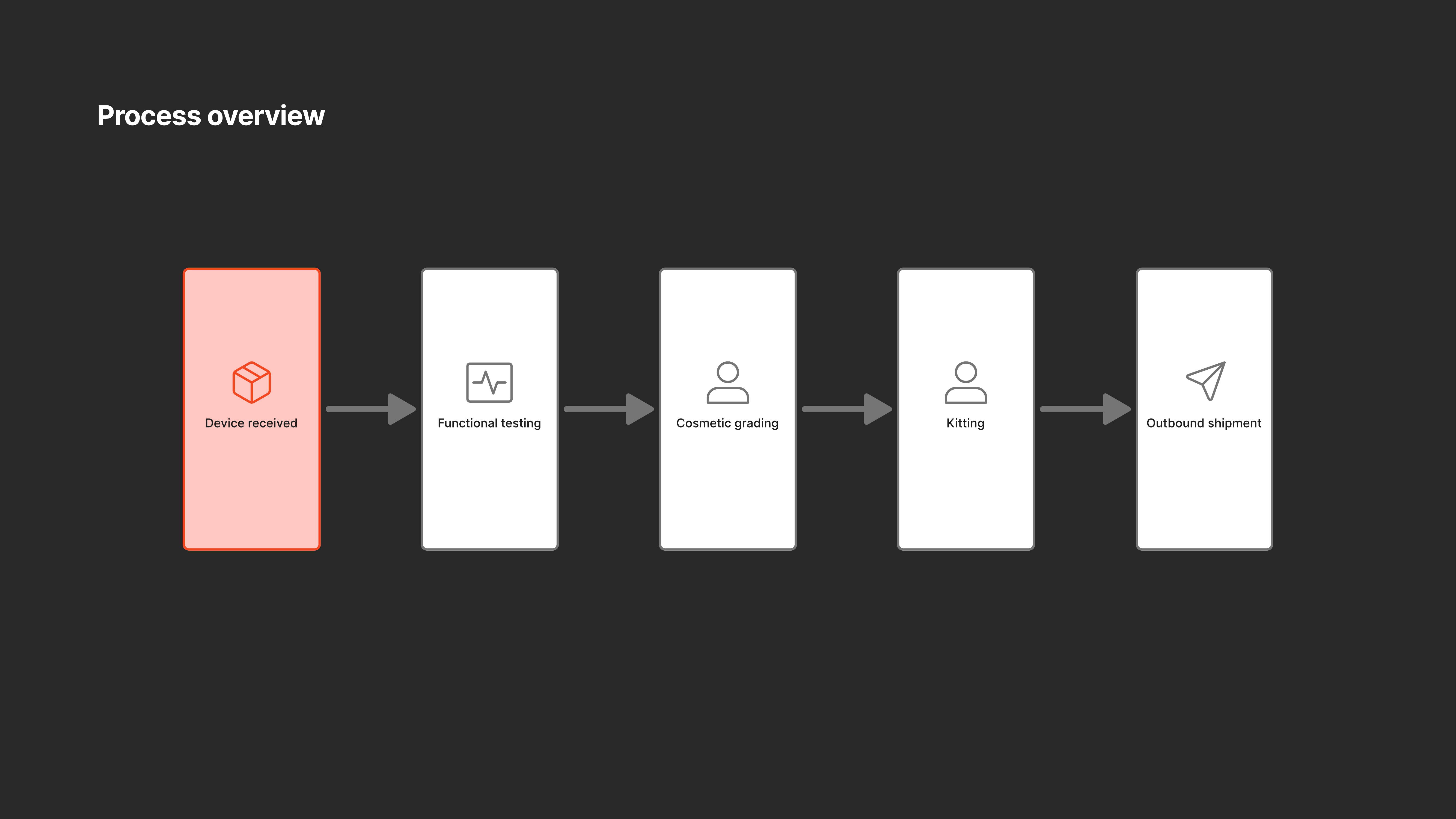
Process overview: Device received → Functional testing → Cosmetic grading → Category assignment → Outbound shipment
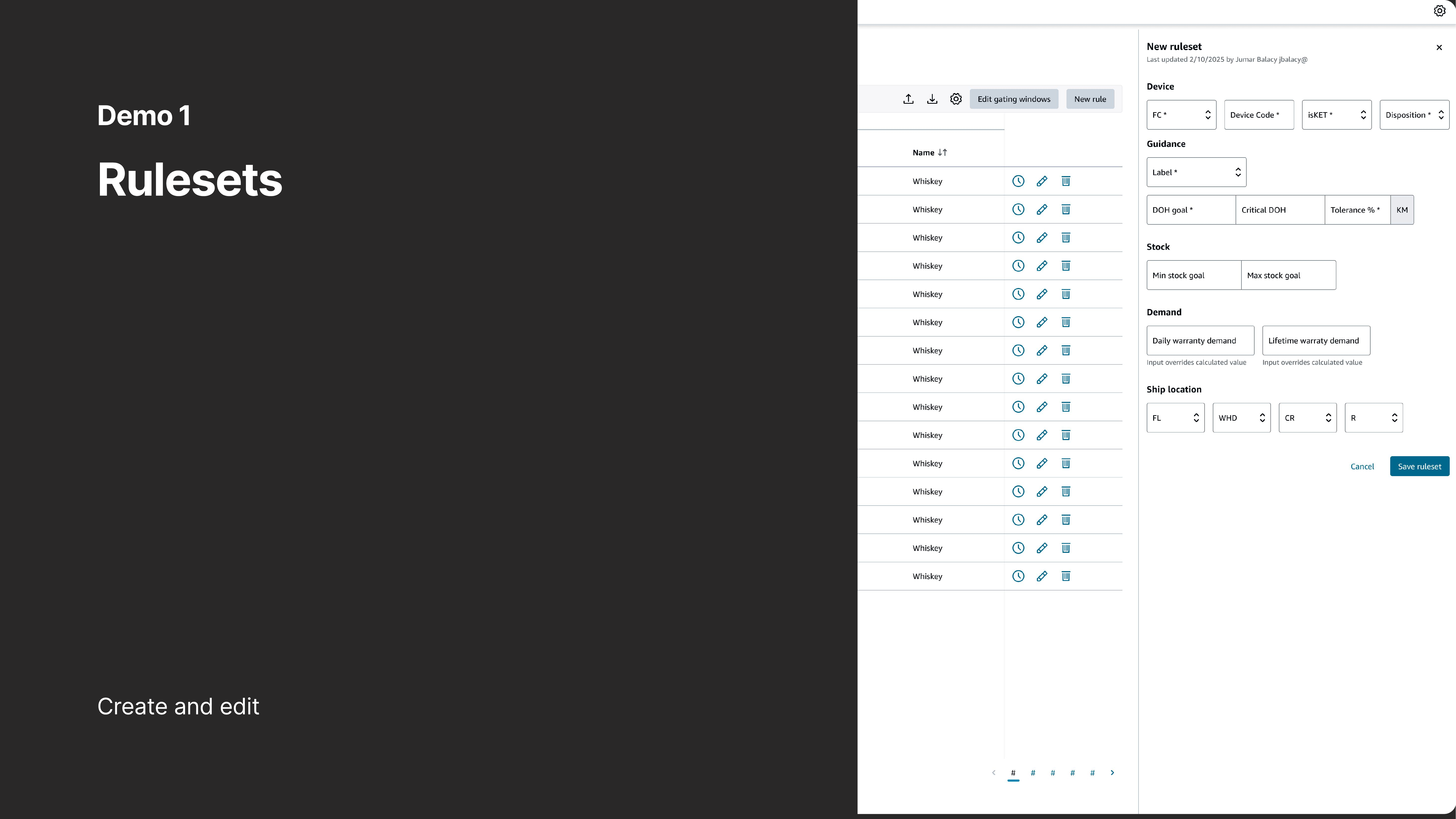
Rulesets management UI with create and edit side panel
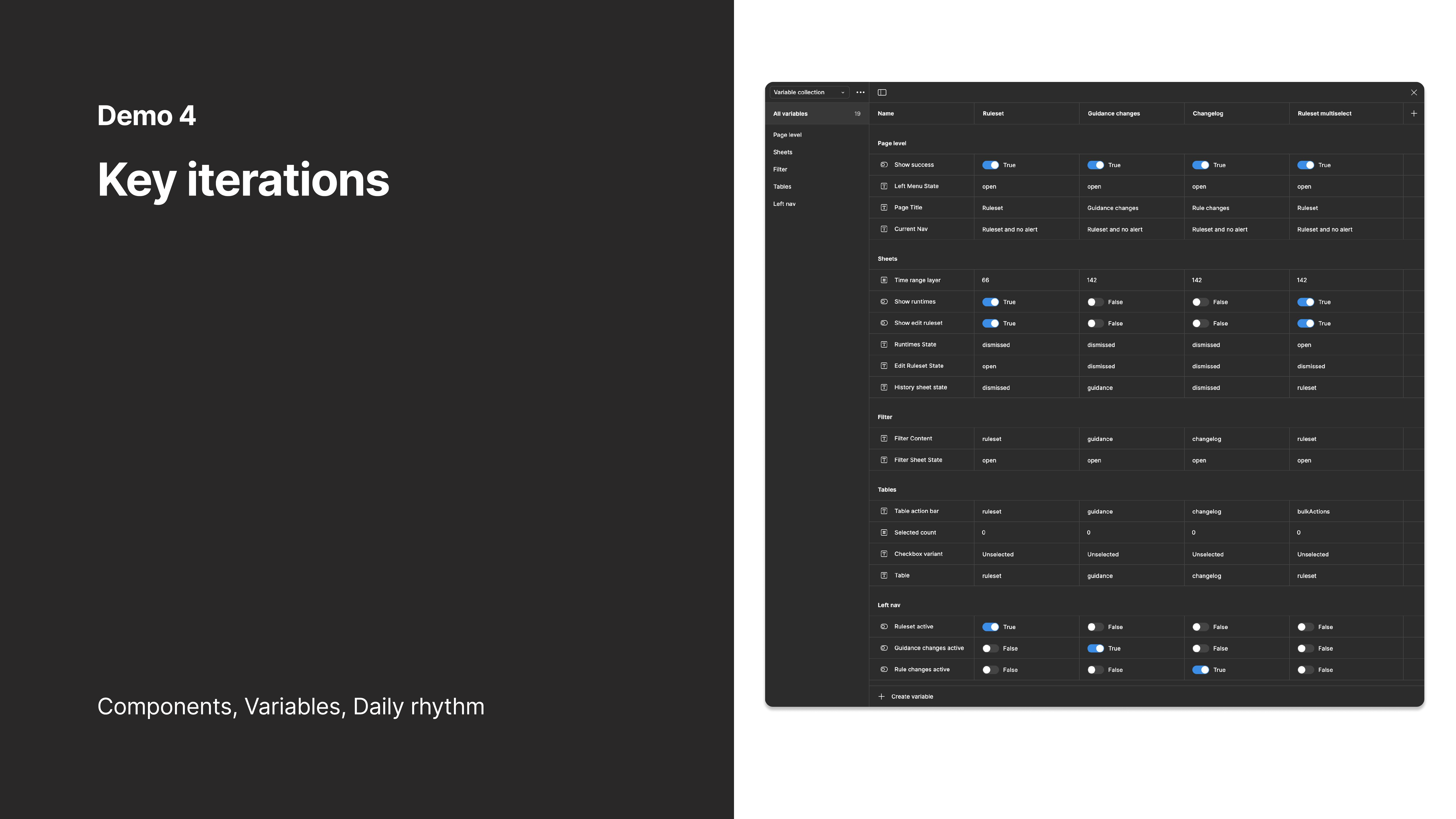
Key iterations: Components, variables, and daily design rhythm in Figma
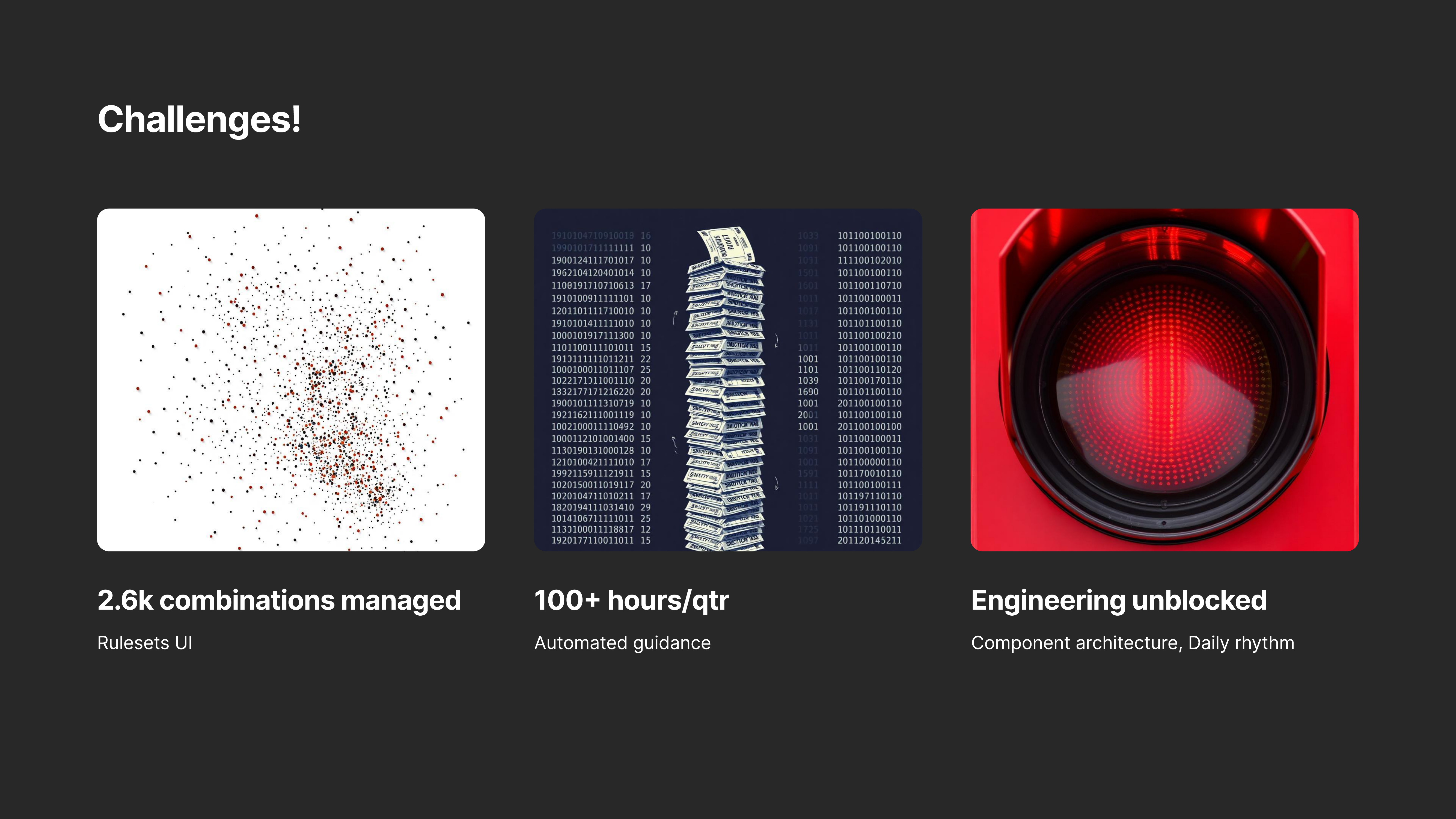
Challenges: 2.6k combinations managed, 100+ hours/qtr saved, engineering unblocked
Outcomes
Contributed to approximately $13M in recovered revenue and ~400 hours of manual effort saved over 12 months
Rulesets UI managed 2.6k+ category combinations with full CRUD operations
Automated guidance saved 100+ hours per quarter through streamlined approval workflows
Component architecture unblocked engineering with a shared design-to-dev language
Reflection
The strongest part of this project was building a system that scaled. The rulesets UI had to handle thousands of combinations without becoming unusable, and the automated guidance had to surface the right information at the right time. The Figma variable system I built became the foundation for rapid prototyping across the team.