Jumar T Balacy

About

I'm a senior product designer who works on internal enterprise tools. Most recently I spent almost five years at Amazon Devices designing tools for supply chain operations, including systems for costing, environmental compliance, supplier business review, and kitting. My most complex project was the Product Lifecycle Management (PLM) system that engineers and change analysts use every day. It's the source of truth for every device Amazon makes.

My experience

My background is in computer science. I graduated from UC Irvine in 2003 and started out as a web developer, and from there I moved into roles as a business analyst, a business intelligence analyst, and then a program manager. I owe a lot of my success in UX to those jobs, where I learned to gather requirements, analyze data, and coordinate work across teams, and I still use all of that in my practice.

A graduate in cap and gown, wearing a stole with the Philippine sun and a purple orchid lei, stands outdoors with two men in jackets after the ceremony.
Graduation day.

In 2008 I joined the Navy and finished my six-year enlistment as a diver for Combat Camera Pacific. While I was there I started and led a physical fitness and academic training program for dive candidates that cut training costs and raised graduation rates.

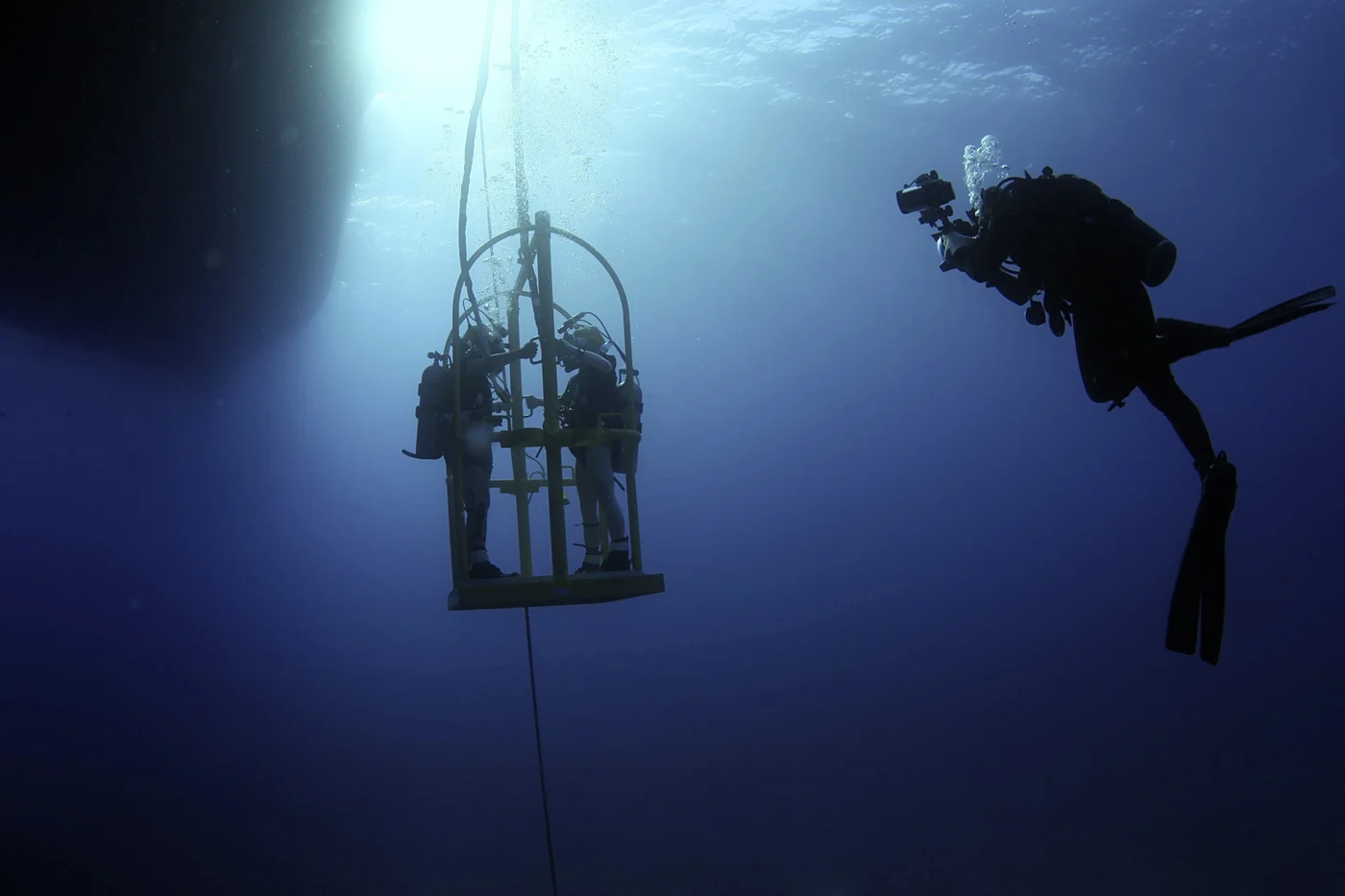
Underwater, Jumar Balacy on the right films two Navy divers standing in a dive stage lowered beneath a ship.
Documenting a surface-supplied dive during RIMPAC 2012 off Pearl Harbor, Hawaii. U.S. Navy photo by Mass Communication Specialist 1st Class Anderson C. Bomjardim
Divers on two small boats silhouetted against a low sun, with a ship on the horizon.
Royal Navy divers during a United States and United Kingdom mine countermeasures exercise, 2013.
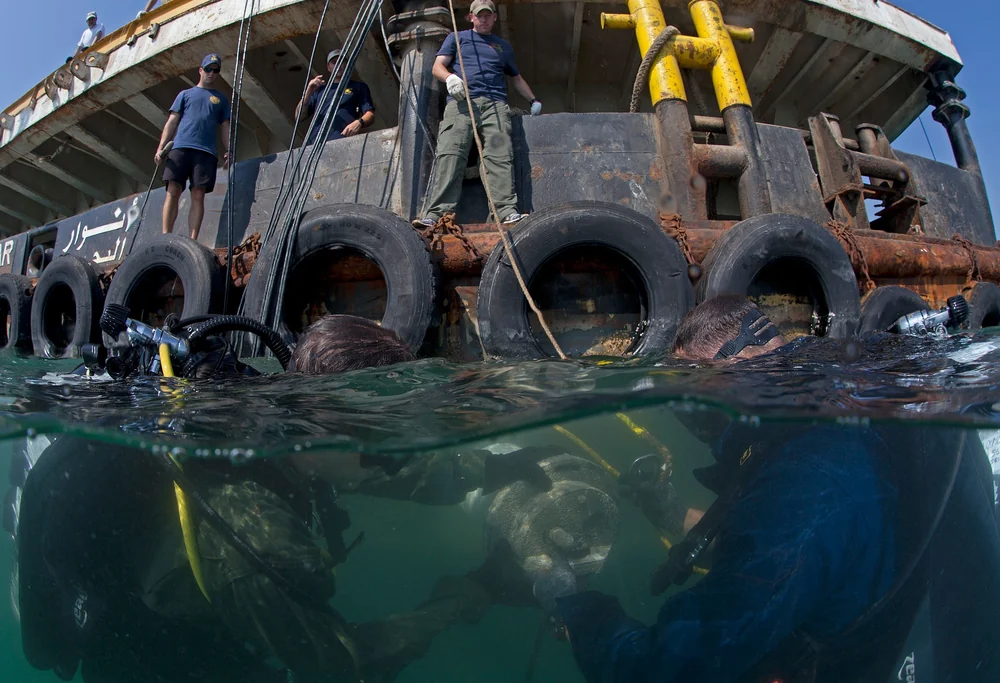
Half above and half below the waterline, divers work beside a tire-lined vessel while sailors watch from its deck.
Divers with Mobile Diving and Salvage Unit 1 recover a mine susceptibility test system, 2012.

Diving photos: U.S. Navy photos by Mass Communication Specialist 3rd Class Jumar T. Balacy.
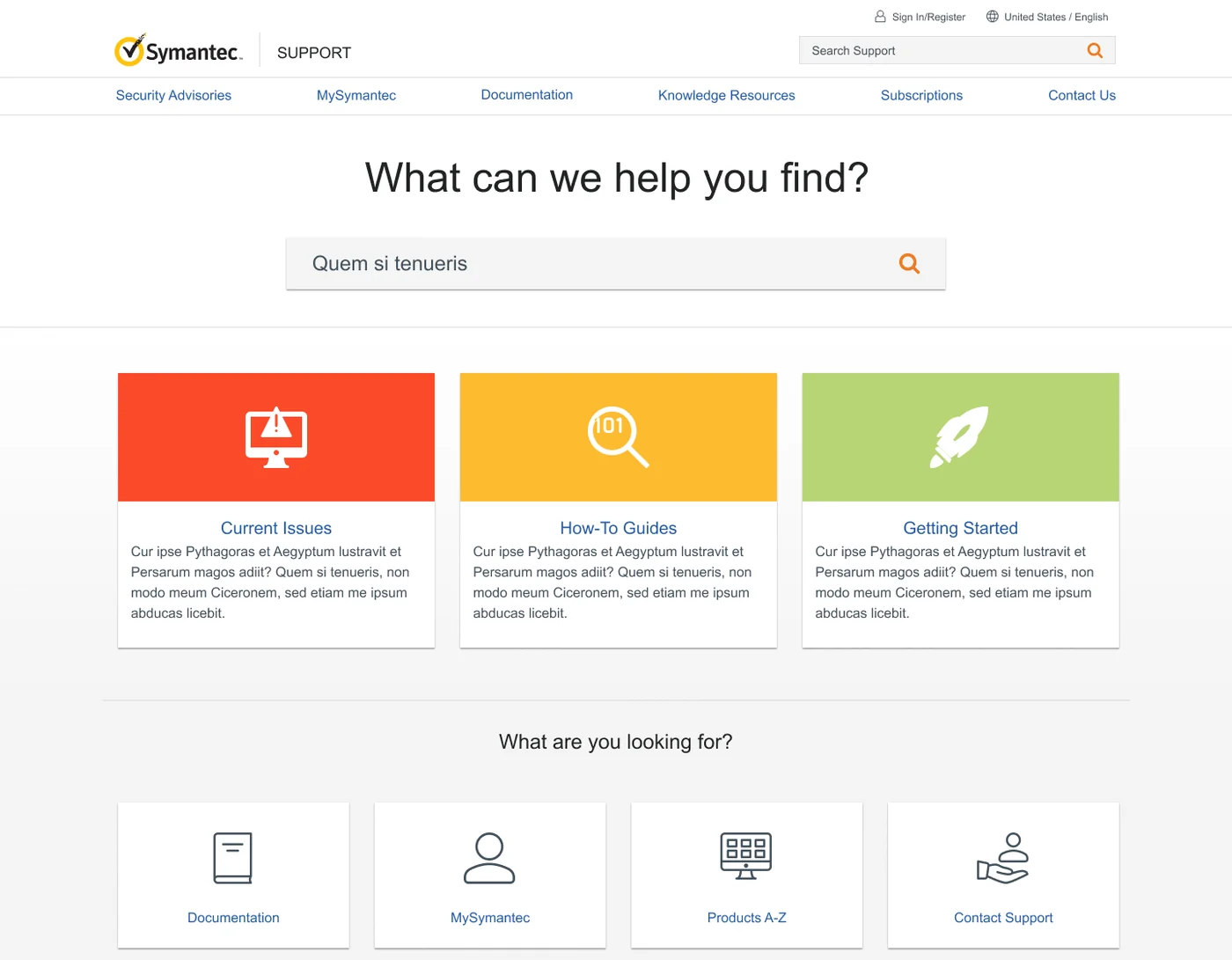
After the Navy I joined Symantec in tech support, and a self-started project to redesign our support portal helped me transition into UX. As the support organization's sole designer I replaced PowerPoint wireframes with research, analytics, and prototypes, and I set up its first design process so UX had a place in how the org built products. I also introduced Figma to the team and used it to build their design system, with engineering coding it into components. When I redesigned the online support ticket flow, it went from 7 screens to 3 and online cases went up 107%, meaning manual ticket creation on the phone went down. The support site redesign was named one of the Top Ten Best Support Websites by the Association of Support Professionals.

The Symantec support site homepage template, with a search box under the heading “What can we help you find?”, three cards for Current Issues, How-To Guides, and Getting Started, and tiles for Documentation, MySymantec, Products A-Z, and Contact Support.
The support site homepage template from the Symantec design system I built in Figma. It took the site from 132 colors to 11 and from 27 font families to 1.

Since then a lot of my work has been on things that didn't exist yet. At Johnson & Johnson Robotics I led UX for surgical tool exchange and the table remote on the robotic surgery platform now called Ottava, and I tested early concepts with surgeons. Ottava received FDA authorization in 2026. At Perficient Digital I built the foundational components for the design system now known as Helix, used across Ascension's hospital and senior living sites.

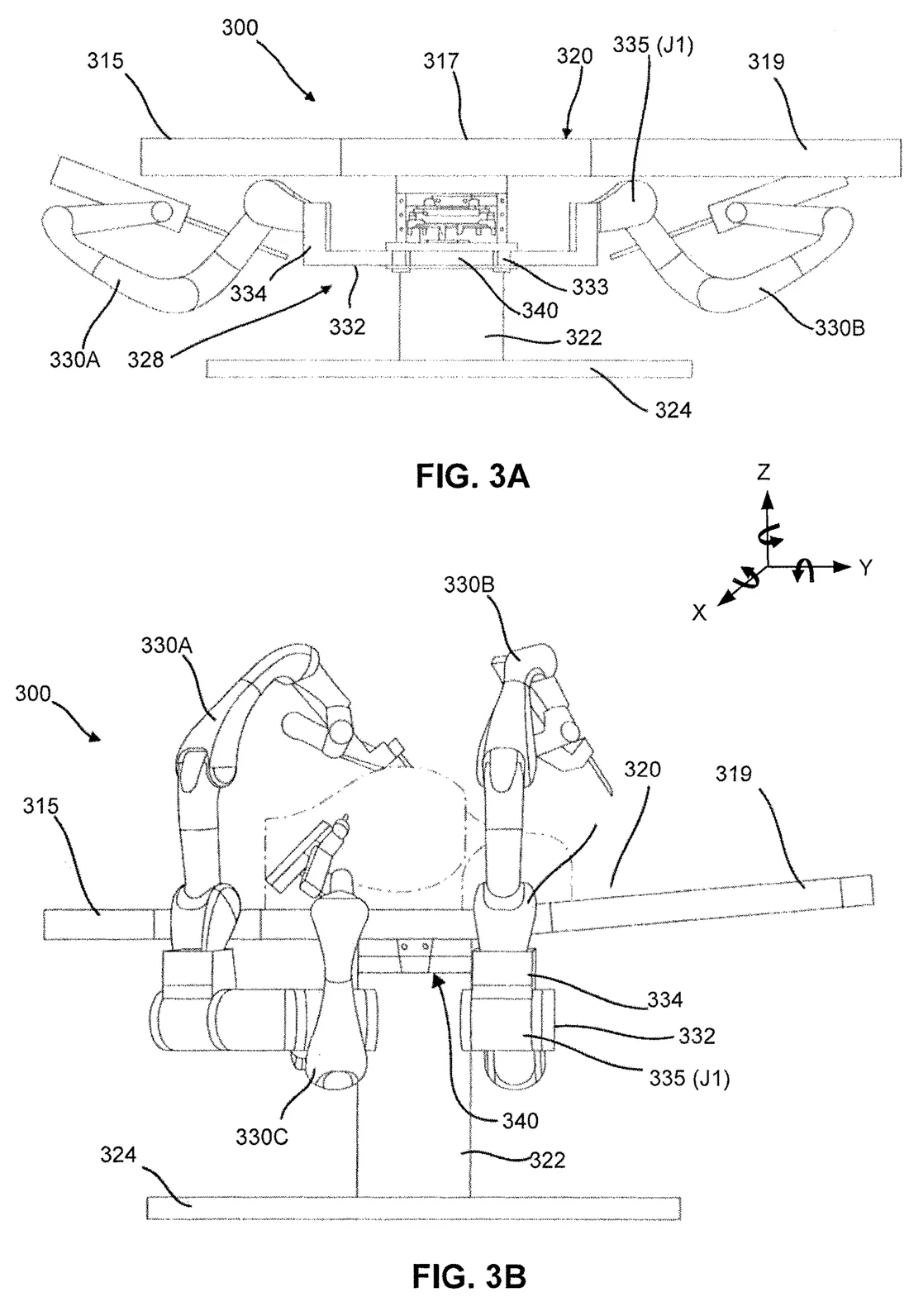
Two patent line drawings of an operating table with robotic arms built in. In the first, the arms are folded beneath the tabletop. In the second, three arms are raised over a patient.
Patent drawings of a table with built-in robotic arms, folded away and in use, from US 11,812,924 (Verb Surgical, filed 2019). An early design for this kind of robot, not my work.
Read the FDA authorization release (opens in a new tab)

At Amazon Devices I was the only designer on the in-house PLM platform for four years, where my work included the Change Order redesign and Workflow Routing. I also co-led a year-long usability study that compared it with a third-party PLM. At the same time I designed tools for teams across the Devices supply chain, including component costing, supplier compliance and sustainability data, supplier business reviews, component-level planning, post-ramp qualification, and Kitting Category Automation. In my last year I designed early AI concepts for leadership at the director level and above, including a supply planning assistant that worked alongside the PLM on whatever item you had open. I also designed concepts for an AI-assisted research tool that records interviews and drafts reports, and for a data lake interface covering item masters, BOM routing, and distribution networks. Along the way I introduced Figma to the Devices design team and helped move us off Adobe XD.

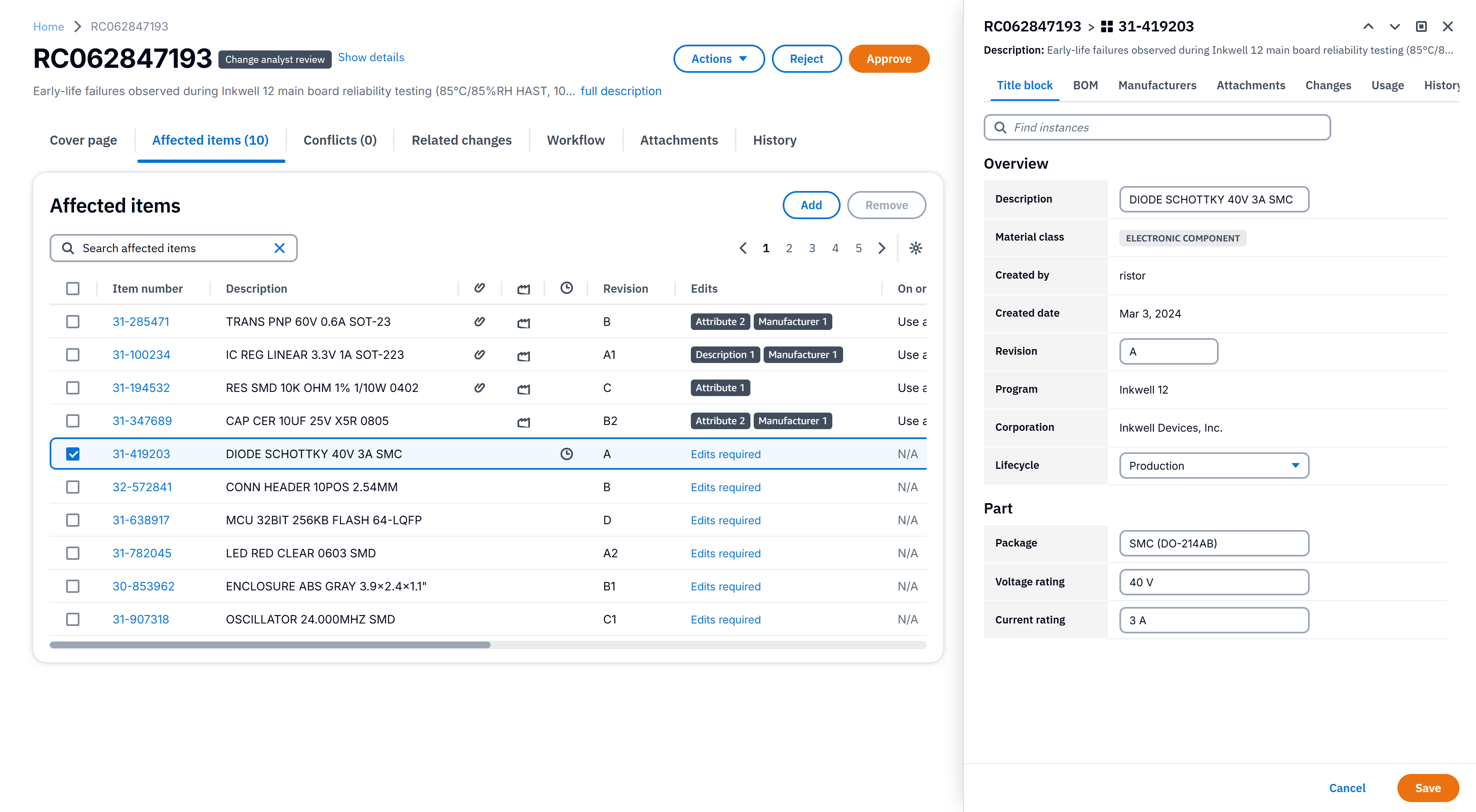
The redesigned Change Order: a condensed header, the affected items table, and an item open in a full-height split panel beside it.
The Change Order redesign for Amazon's in-house PLM.

How I work

My approach to internal tools is to simplify the work while keeping the nuance experts rely on. I learn that nuance through my research, bring it to product and engineering early, and stay through implementation so the edge cases are handled.

I'm a research-based designer, so I start by gathering both quantitative and qualitative data. The methods I use most are 1:1 semi-structured interviews and rapid prototypes that I test in unmoderated studies, and I also use Jobs to Be Done to set up long-term analysis of a product.

In 2024 I co-led a year-long usability benchmark of Amazon's in-house PLM while still designing for it. The change order comments I designed that year were one of the fixes the study measured, and their ease of use went from 69% to 90%. Alongside that I designed a component costing dashboard, an AI tool that extends BOMs, and early concepts for an AI-assisted research tool. I do my best work where research and design are the same job, from finding the problem to fixing it and proving the fix worked.

How I scope

I design the optimal version first, then scope it with engineering into what ships now and what comes next.

  1. BestThe full design, tested with users, so everyone can see where the work is headed. The “What I'd do next” sections in my case studies come from this level.
  2. NextThe parts engineering can't fit yet, designed and handed off so they're ready for a later sprint. Moving a Change Order back from the workflow summary was one of these.
  3. NowWhat ships first, chosen by the biggest daily cost it removes against engineering effort. On the Change Order redesign, the header went first because it was the simplest change with an immediate payoff.

At every level I start from the mental model experts already have, like Excel or the third-party PLM's approval table, and improve from there.

I also love the visual craft side of design. Right now I'm studying graphic design to deepen my typography knowledge. Fat Didones are back!

Teaching and volunteer

I want to give back to the design community, so I teach the UX capstone at UC Santa Cruz Silicon Valley Extension, where students take a real client project from research to an interactive prototype using Claude Code, Vercel, Supabase, and Figma MCP. Outside the classroom I volunteer with Hire Heroes, and I've mentored designers for about five years, including veterans moving into UX.

What I'm looking for

I want to keep working on internal tools, especially for teams solving supply chain problems or building supply chain products. Maybe you're working on inventory levels or how your products move from concept to end of life. I'm available now for a senior product design role on a team like that, whether it's full-time, contract, or fractional. If you're hiring, email me at jbalacy@gmail.com.